Case Study: Ensuring Creators Get What They Deserve
The Beginning: An Idea Left on the Shelf
Li Ran (pseudonym) is an independent developer and a dedicated player of several online games. In one particular game, he discovered a pain point: the built-in plugin system had a poor user experience — players had to fiddle with configurations for hours just to set up a comfortable interface and keybindings. He wanted to create a plugin integration pack that bundled commonly-used optimization features, allowing newcomers to get a comfortable gaming experience with one click.
The idea had been brewing in his mind for a long time, but he never got started.
It wasn't a lack of technical skill — he ran the numbers and found that the effort "wasn't worth it": developing a game plugin pack would require a couple of months of spare time, at minimum. After finishing it? Release it for free, and he'd receive nothing but a few thank-you posts and forum points. Charge for it, and he'd have no mature payment or licensing infrastructure — send users a registration code, and if they casually shared it on a forum, within a month the entire internet would have "free versions," and he'd earn neither money nor reputation, only the label of "greedy sellout."
Many creators face this exact dilemma: great ideas exist, but they are abandoned because there's no way to get what they're worth.
This situation is especially prevalent in the world of "lightweight creative software" — game plugins, efficiency tools, browser extensions, independent game mods. Individually, these products aren't high-value, but together they represent enormous amounts of a creator's time and effort. The problem is: without a lightweight, automated licensing mechanism that's extremely easy to integrate, creators are almost inevitably consumed by "free sharing."
The Root of the Problem: It's Not That People Won't Pay, It's That Paying Feels Futile
After releasing the plugin pack for free with an Alipay donation link, Li Ran ran an experiment. The results were surprising — some people did send him a few yuan, but more common were:
- People who sent 1 cent and left a comment "thanks for sharing"
- People who received the plugin and immediately forwarded it to game groups, forums, and online drives
- Even someone who commented on Li Ran's own post saying "I saw this on a certain forum before, free download" — the link pointed to Li Ran's original release thread, but with someone else's username attached
Li Ran realized: the problem isn't that nobody is willing to pay; it's that the boundary between paid and free is completely blurred. Once a ZIP file is out there, nobody can tell "who is a legitimate user and who is a secondary distributor." More critically, the users who genuinely valued his work and were willing to pay had no clear channel to obtain a "legitimate license" experience.
The Turning Point: From "Should I Charge?" to "How Can I Charge with Dignity?"
What truly convinced Li Ran to act was an accidental product experience.
He purchased an overseas desktop productivity tool. The software offered a 7-day full-feature trial, after which an activation window appeared — enter a license key to unlock all features. The entire process was seamless: scan QR code to pay → receive license key by email → activate and use. Legitimate users got a clear sense of "I supported the creator," while those sharing links and installers would see "This license key has already been used by another device" during activation.
For the first time, Li Ran directly experienced that the value of a license system isn't just about protecting revenue — it's about preserving a mutually respectful relationship between creator and user.
He decided to implement the same model for his plugin pack. His core requirements were clear:
- Integration had to be simple enough to complete in an afternoon
- The user experience had to be smooth — trial, payment, and activation all automated
- License policies had to be flexible, such as one license key supporting multiple devices (for using at home and work)
The Solution: Two Steps to Complete Commercialization's Final Step
Using the License Manager SDK, Li Ran completed the licensing integration for his plugin pack in a single afternoon. The process was even simpler than he expected.
The Integration
from license_manager import LicenseClient
client = LicenseClient(
server_url="https://api.lm.cedar-v.com",
api_key="your_api_key",
product_id="your_product_id"
)
result = client.validate()
if not result.valid:
show_activation_dialog()After these dozen lines of code, the SDK handles everything automatically: downloading the public key and license on first launch, checking authorization status, showing an activation window if not activated, and binding to the device hardware fingerprint to prevent one key from being used on multiple devices. No policy configuration needed — the SDK runs itself, stable and reliable.
Day-to-Day After That: Create a License Key, Send It to the User
Once the integration was complete, Li Ran's ongoing work was reduced to just two things:
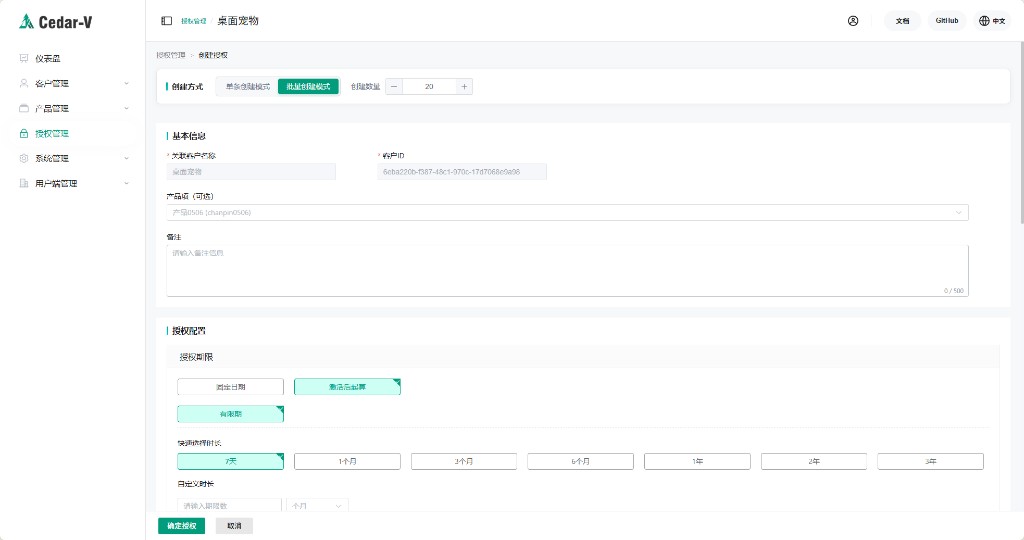
- Create a license key in the license platform
- Send the license key to the user
That's it. No complex policy configuration, no backend parameters to tune. The SDK runs on its own once deployed — stable, reliable, worry-free.
Hardware Fingerprint Binding: Making Reselling "Not Worth It"
This was the most critical component. Once license keys were bound to device fingerprints, simultaneous activation of one key on two devices was completely blocked. There were cases where someone tried to "activate on behalf of others" in group chats by sharing screenshots of their license key — only to find that activation must be completed on one's own device, rendering screenshots useless.
Li Ran said: "I never expected everyone to stop sharing. But with the license system, the cost of reselling is higher — secondhand users can't activate, and the official price isn't expensive, so most people naturally choose to buy directly. This is far more dignified than my previous approach of 'begging people not to share.'"
The Change: Not Just Income, But an Entire Creative State
After integrating the license system, Li Ran's product distribution logic fundamentally changed.
Before, he worried that releasing the plugin would lead to uncontrolled redistribution, so he only shared within a few trusted circles. Now, he could confidently post the plugin pack on game forums, subreddits, and BiliBili tutorial video descriptions — because anyone who wanted to actually use the plugin had to obtain a license key through proper channels. This meant promotion no longer equals loss of control.
More importantly, economically. Li Ran never disclosed specific revenue figures, but he mentioned one detail: half a year after launch, in a particular month he received a significant number of license renewal orders. At that moment he realized — while he was sleeping, someone was purchasing his license key. This sense of passive income gave him the confidence to invest more energy into maintaining and updating the plugin during his spare time.
He later developed a data analysis tool for another game, spending another afternoon integrating the licensing system. The SDK integration was exactly the same — just swap in a new API Key, create a new product in the platform, generate a license key, and send it to the user.
The Real Value: Not Anti-Piracy, But Protecting the Positive Cycle of Creation
Li Ran's story reveals an often-overlooked principle: the ultimate purpose of software protection is not to battle crackers, but to give people willing to pay a dignified reason to pay, and give creators a reason to keep creating.
Many independent developers are afraid to commercialize not because of technical limitations, but because they lack a "usable licensing mechanism." They've seen too many endings like this: spend months building a tool, release it, watch it get freely distributed across every channel, earn neither income nor recognition, and endure the painful feeling of being "used for free." Over time, even the most passionate creators choose to keep their best ideas locked in their heads.
What License Manager does in this cycle is perhaps not so complicated: it makes "charging" simple and dignified enough that creators no longer need to agonize over "should I charge or not?" — they can redirect that energy to what actually matters: building good things.
When creators can earn stable returns from their work, they are more willing to maintain and update it. With continuously updated quality products, more users are willing to pay. Paying users enable creators to invest in the next project — this is a sustainable creative ecosystem.
Customer Feedback
"What truly moved me was that after purchasing a license, many users proactively reached out to say 'the plugin is great, I'd like to support this.' When I released it for free before, the gratitude I received was cheap — 'thanks楼主,' and that was it. Now, the people willing to pay are genuinely the ones who recognize the value of this product. This feeling of being respected is more meaningful to me than the revenue itself."
Closing
A healthy technology ecosystem requires that creators receive what their work is worth. This isn't just a business logic — it's a form of respect for creativity and labor.
What License Manager does is make the task of "protecting creators' rights" as simple as installing a plugin.